Interview with Dr. Jimmy Li: From ADC to XDC, WuXi XDC Reshapes the Integrated CRDMO Landscape Through Global Footprint and Technology Innovation
Building a solid industrial base for conjugate drugs and empowering global pharmaceutical innovation.
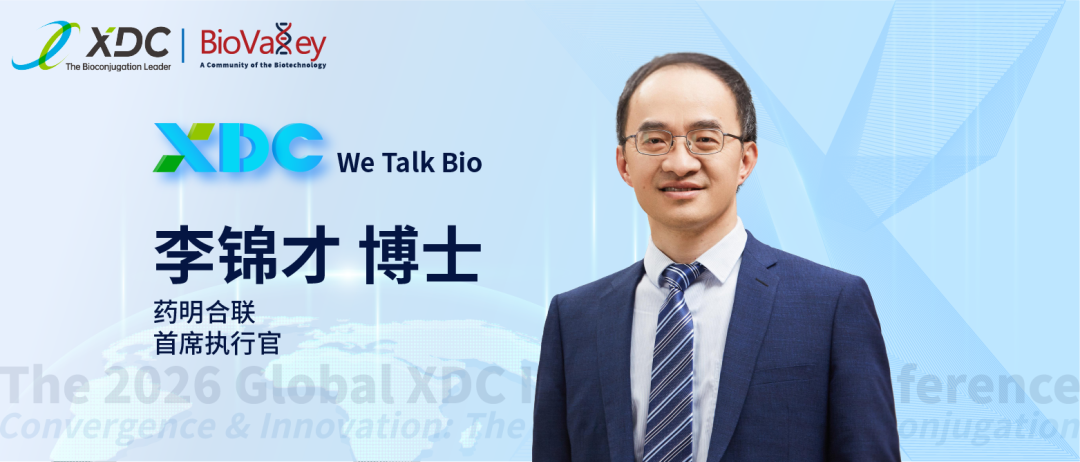
Dr. Li Jincai (Dr. Jimmy Li) is CEO and Director of WuXi XDC, responsible for overall strategy, business development and operations. With 25 years of biopharmaceutical R&D and industrialization experience, he held senior roles at WuXi Biologics, Genentech and Tanox. Six years ago Dr. Li led the integration of WuXi XDC's ADC core capabilities, building a world-leading conjugation technology and one-stop service platform.
Editor's note: ADCs are one of the most dynamic biopharma segments in recent years, with a fast-growing market and active BD transactions. Their manufacturing complexity creates far higher outsourcing demand than conventional biologics. With its scarce end-to-end one-stop service capability, WuXi XDC has established clear industry leadership, serving more than 810 global clients including 15 of the top 20 multinational pharma companies. This year the company bolstered commercial capacity through the acquisition of TOT Biopharm (BioDlink), achieved GMP release of the BCM3 dual-function and DP4 lines in Singapore, and is expanding the Jiangyin payload-linker site. Beyond ADC CRDMO services, WuXi XDC is broadening its boundaries with the WuXiTecan-2 technology platform licensing model. Against this backdrop, what is WuXi XDC's deepest moat? How will it capture more overseas demand? And how is it positioning for novel bioconjugates? BioValley sat down with Dr. Jimmy Li for an in-depth interview.
The following is an excerpt from the interview: This year we have seen WuXi XDC quickly strengthen capacity at home through the acquisition of TOT Biopharm and its planned Jiangyin site. At the same time, the Singapore site has begun commercial production. Does this mean WuXi XDC's integrated 'Global Service, Local Response' network has moved from blueprint to reality?
Dr. Jimmy Li: This year is a milestone. We have realized 'Global Service, Local Response.' The Singapore site is a critical step in our 'global dual-site supply' strategy. After it comes online, clients can flexibly choose production routes: process development can be done in China and manufacturing in Wuxi or Singapore; or start in Wuxi and move to Singapore for commercialization; or go directly into Singapore to supply global markets. Singapore also strengthens supply-chain stability. After launch, many clients prefer supply sites not limited to a single location or plant. Within the WuXi XDC system, we can produce synergistically in Singapore and Wuxi under the same process and equivalent facility design, ensuring stable technology transfer and production transfer while allowing flexible capacity allocation between the two sites after launch, comprehensively improving client supply-chain resilience.
Compared with conventional large- or small-molecule drugs, what unique challenges do ADCs face in process development and scale-up? What advantages does WuXi XDC have to help clients address them? What is the deepest moat of the company's end-to-end one-stop service system, and how will it remain leading in the future?
Dr. Jimmy Li: The complexity of ADCs is well recognized across the industry. As the first combination of chemistry and biology, ADCs span large and small molecules and involve conjugation technology, DAR values and other complexities, creating challenges across process development, manufacturing and supply chains. Analytical methods are also extremely complex: the analytical work for a single ADC is equivalent to two or three single-agent drugs. These are major pain points. As early as 2020 we clearly saw these challenges in technology, CMC, industrialization and supply chain. So from day one we committed to a fully one-stop service model that integrates all ADC capabilities on one platform. Clients only need to come to WuXi XDC to meet all ADC needs from early R&D and process development through manufacturing and commercialization. Across the entire chain we help clients develop the best molecule with the highest probability of success and move it to clinic and industrialization as fast as possible. This greatly simplifies client supply chains and improves flexibility. These are WuXi XDC's core value and deepest moat.
As ADCs evolve into XDCs, the boundaries of bioconjugates continue to expand. What are the main development differences between these novel bioconjugates and traditional ADCs? With rich project experience in XDCs, what forward-looking deployments and concrete measures is WuXi XDC taking?
Dr. Jimmy Li: WuXi XDC's English name itself reflects XDC — we recognized from the start that this field goes far beyond ADCs and that many other conjugation approaches can yield many different types of conjugates, i.e., 'everything can be conjugated.' In recent years a large number of XDC molecules have moved from early research into clinical stages, with the fastest reaching late-stage trials, confirming the direction we foresaw five years ago. Today about 40-50% of the conjugate molecules our teams develop annually are novel XDCs. Each modality has its own characteristics and challenges. For example, AOCs (antibody-oligonucleotide conjugates) change the charge profile of the original antibody after conjugation, bringing unique CMC, analytical, formulation and stability challenges. APCs (antibody-peptide conjugates) also have their own uniqueness. Every XDC type requires unique technology support, which in turn creates differences in process development and facility design. For the most novel XDCs, clients increasingly need us from the earliest research stage. Since founding, we have anticipated the inevitable evolution from ADC to XDC, continuously iterating our own technology and platform capabilities to provide clients with the most certain and fastest high-quality service across the full chain from R to D to M.
Beyond one-stop CDMO services, WuXi XDC launched technology licensing this year. What prompted this model and what is the strategic thinking behind it?
Dr. Jimmy Li: Everything we do is ultimately about empowering clients. For the technologies clients need to develop XDCs, we either already have them through in-house R&D or we bring them in through partnerships, ensuring we provide advanced technology at the early research stage to help clients develop optimal molecules. Our technology layout has clear focus areas. First is conjugation technology: ADCs and XDCs have different conjugation requirements. Conventional ADCs typically have DAR of 4 or 8, while AOCs mostly have DAR of 1. We have been working on DAR=1 technology for years and launched a solution for client AOC development last year. Importantly, all our conjugation technologies work without antibody engineering: wild-type antibodies can be directly conjugated to achieve DAR=1 or DAR=2. This has been an important direction of our technology iteration. Second, following the ADC-to-XDC evolution from single payload to dual payload, we introduced dual-payload conjugation technology that allows clients to combine Payload A and Payload B in the simplest, most efficient way and flexibly adjust their ratios. Third, as payloads become more homogenized, we continue to develop novel linkers and payloads to give clients the most advanced and timely technologies, hence WuXiTecan-2, which matches the most hydrophilic linkers or modified payloads to help clients develop innovative molecules. These technologies empower clients, and licensing is an important way for clients to own the IP and the complete ADC or XDC molecule. We completed the first license in Q1 this year and expect to announce a second soon. We are also providing evaluation services for other clients to explore more licensing collaborations.
BD transactions in biopharma remain very active, and licensing models keep evolving. What is WuXi XDC's licensing model for different client types, such as MNCs and NewCo companies?
Dr. Jimmy Li: We are very open and flexible. Clients can take a direct technology license and develop their ideal molecules independently. We can also combine licensing with follow-up CMC and manufacturing services as bundled support. In addition, we can help clients through Co-D models: if a client has a good antibody or binder but lacks payload and payload-linker technology, we can enter from the payload-linker side and use our ADC development expertise to turn the original binder into an ADC. We are also exploring synergies with WuXi Biologics, where WuXi Biologics provides binders and we provide linker-payloads to jointly develop ADCs with Best-in-Class potential. Such ADC molecules can then partner with capital and entrepreneurs to create NewCo projects, empowering clients and the innovative drug industry through multiple paths. Ultimately, we hope to empower clients, entrepreneurs and innovators through more diversified collaboration models. Client success is the higher-level value of our business.
The 2026 Global XDC Innovation Conference will be held in Wuxi on September 17-19. As the host, what are your hopes and expectations? Which directions do you personally want to explore in depth?
Dr. Jimmy Li: This is the fourth time we have co-hosted the Global XDC Innovation Conference with BioValley. First, innovation. ADCs are accelerating into XDCs, and this trend is increasingly clear. This year we once again take 'innovation' as the core theme, looking forward to in-depth exchanges with clients, entrepreneurs and industry peers on XDC innovation technologies. Second, industrialization. Innovative achievements must reach patients through industrialization. The CMC, manufacturing, supply-chain and late-stage transition challenges involved are key topics this year. Third, collaboration. Innovation in biopharma cannot happen without collaboration. This year's conference formally introduces the Biopartnering session to build precise matchmaking bridges, with one-on-one meeting mechanisms and dedicated spaces for pharma and investment institutions. Fourth, AI. We are in the AI era and look forward to more discussions and brainstorming on how AI can better empower innovation, improve whole-industry-chain efficiency and strengthen supply-chain stability.
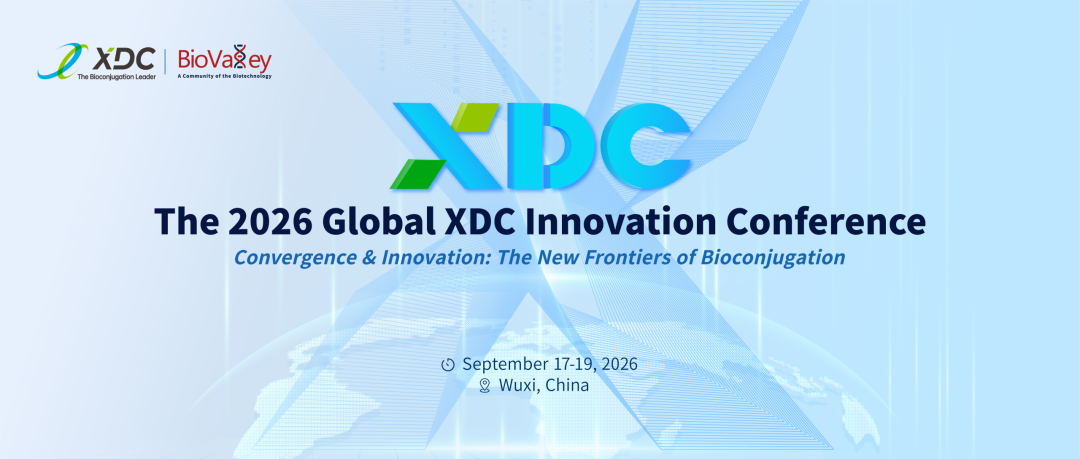
The 2026 Global XDC Innovation Conference, co-hosted by WuXi XDC and BioValley, will open in Wuxi, Jiangsu on September 17-19. Centered on 'Convergence & Innovation,' the conference features six themed forums plus a Biopartnering session, covering next-generation conjugate molecular design, differentiated linker and payload innovation, dual-payload ADCs and AOC/APC therapies, AI-driven discovery and preclinical safety, CMC scale-up manufacturing, and global clinical translation and commercialization. To date more than 50 global speakers and 40 sponsors have joined, and over 1,000 industry colleagues from home and abroad are expected to attend. Dr. Jimmy Li will attend the conference and looks forward to meeting peers on site.

About WuXi XDC (stock code: 2268.HK): WuXi XDC Biologics Inc. (2268.HK) is a global leading CRDMO for bioconjugate drugs, providing clients worldwide with diverse innovative conjugation and payload-linker technologies to support next-generation ADC R&D. The company focuses on one-stop services for ADCs and other bioconjugates from early R&D and preclinical stages through commercial manufacturing, covering R&D and GMP production of antibody or other conjugate intermediates, linkers/payload-linkers, conjugated drug substances and conjugated drug products. For more information, please visit www.wuxixdc.com. Contact: Investor Relations wuxixdc.ir@wuxibiologics.com; Media wuxixdc_pr@wuxibiologics.com; BD wuxixdc_info@wuxibiologics.com.