FDA Approves Lyrfigtu (Lirafugratinib) for FGFR2+ Cholangiocarcinoma, with WuXi AppTec RCS Covalent and Fluorine Chemistry Platforms Spotlighted
On September 23, 2026, the FDA approved Elevar Therapeutics' highly selective, irreversible FGFR2 inhibitor Lyrfigtu (lirafugratinib) for adults with previously treated, unresectable, locally advanced or metastatic cholangiocarcinoma harboring FGFR2 fusions or rearrangements. Phase 1/2 ReFocus data showed 46% ORR, median DOR of 11.8 months, and median PFS of 11.3 months. WuXi AppTec's Research Chemistry Services (RCS) covalent-chemistry and fluorine-chemistry platforms are positioned to provide integrated chemical support for such precision-drug programs.
On September 23, 2026, the U.S. FDA approved Elevar Therapeutics' highly selective, irreversible FGFR2 inhibitor Lyrfigtu (lirafugratinib) for adults with previously treated, unresectable, locally advanced or metastatic cholangiocarcinoma harboring FGFR2 gene fusions or other rearrangements. Lirafugratinib was originally developed by Relay Therapeutics; Elevar Therapeutics acquired global development and commercialization rights in late 2024.
The approval was based on results from the Phase 1/2 ReFocus study. In 114 patients with FGFR2 fusion- or rearrangement-positive cholangiocarcinoma who had not previously received an FGFR inhibitor, independent review committee-assessed objective response rate (ORR) was 46%, median duration of response (DOR) was 11.8 months, and median progression-free survival (PFS) was 11.3 months.
From Static Photo to Dynamic Movie: Protein Motion Unlocks FGFR2 Selectivity
The fibroblast growth factor receptor (FGFR) family includes highly similar kinase domains among FGFR1, FGFR2 and FGFR3. Conventional X-ray crystallography showed that their drug-binding pockets look almost identical, making it difficult to design a selective FGFR2 inhibitor while avoiding off-target inhibition of FGFR1 and FGFR4—each linked to adverse effects such as hyperphosphatemia and diarrhea.
Researchers therefore asked a different question: if the proteins look alike in a still image, do they move the same way? Long-timescale molecular dynamics simulations revealed different P-loop dynamics near the binding site in FGFR1 versus FGFR2. A crystal structure is like a photograph; molecular dynamics is like a movie. It was in that movie that the team found a new route to high selectivity.
Exploiting this dynamic difference, the team designed a covalent inhibitor that more readily approaches Cys491 on the P-loop in a conformation suitable for covalent bond formation in FGFR2, while the geometry in FGFR1 disfavors the reaction. The resulting lirafugratinib showed ~250-fold selectivity over FGFR1 and more than 5,000-fold selectivity over FGFR4 in vitro.
One Fluorine Atom: Polishing a Lead Compound into a Drug Candidate
Improved target selectivity alone does not make an ideal candidate. After multiple rounds of structural optimization, the team arrived at a promising lead, compound 10. To advance it further, the molecule's overall properties still needed improvement. The decisive change was the addition of a single fluorine atom at a specific position, giving rise to lirafugratinib.
According to the publication data, lirafugratinib showed further improvements in potency and selectivity over compound 10, along with better overall profiles across physicochemical properties, DMPK and off-target characteristics. A seemingly tiny structural change shifted the balance among activity, selectivity, pharmacokinetics and developability.
From Last Resort to Standard Tool: The Evolution of Covalent Drugs
Covalent drugs have a longer history than modern targeted therapy, but because they form relatively durable chemical bonds with proteins, researchers historically worried that excessive reactivity could cause nonspecific protein binding and safety risks. For a long time, 'covalent' was not a favored label in drug design.
That perception changed after the 2013 FDA approval of the BTK covalent inhibitor ibrutinib, followed by EGFR-targeted covalent inhibitors such as osimertinib, and in 2021 the first FDA-approved KRAS G12C inhibitor sotorasib, which exploits a cysteine created by the G12C mutation. A 2025 review noted that, of the 88 protein kinase inhibitors approved by the FDA at that time, 11 form irreversible covalent complexes with their targets, confirming that covalent mechanisms are moving from a cautious strategy to a routine tool in medicinal chemistry.
Modern targeted covalent inhibitors are not designed as highly reactive groups that wander the cell looking for proteins to bind. Instead, the non-covalent portion of the molecule first recognizes and binds the target, bringing a finely tuned reactive group—the warhead—close to a specific amino acid before the covalent reaction occurs. By combining target recognition with covalent reactivity, researchers can tune binding mode, reactivity and selectivity in an integrated way. Lirafugratinib exemplifies this design logic.
WuXi AppTec RCS: Integrated Covalent and Fluorine Chemistry Enablement
For this evolving field of targeted covalent inhibitors, WuXi AppTec's Research Chemistry Services (RCS) has built a systematic covalent chemistry discovery platform spanning molecular design, synthetic optimization, analytical purification and mechanism validation, providing partners with integrated support from early exploration through candidate advancement.
With more than 1,000 discovery chemists experienced in covalent inhibitor R&D and 16,000 readily accessible covalent chemistry building blocks, RCS has delivered over 180,000 covalent compounds from milligram to kilogram scale and supported more than 100 client collaboration programs and over 40 preclinical candidate (PCC) advancements. The platform has accumulated broad warhead design and application experience, covering 40 classes of reactive groups, 17 of which are key warheads available for rapid deployment, enabling differentiated molecular design strategies for diverse target microenvironments and reaction sites.
Operationally, RCS integrates advanced synthesis, analysis and purification platforms with mechanism-oriented research. An LC-MS-driven covalent screening platform supports intact protein mass spectrometry screening, binding-site peptide mapping and intracellular covalent screening assays for rapid confirmation of target binding and reaction specificity. Targeted proteomics and chemoproteomics approaches further enable systematic assessment of target occupancy and potential off-target binding risk, balancing reactivity, selectivity and safety at an early stage.
In fluorine chemistry, the RCS platform leverages expertise accumulated since 2012 to cover more than 20 classes of fluorination reactions and over 10,000 fluorinated building blocks, supported by a well-developed condition-optimization system. Capabilities include common fluorinated functional groups such as deoxyfluorination, trifluoromethylation, difluoroalkylation and trifluoromethylthiolation, as well as demonstrated synthetic experience with challenging groups such as OCF3, N-CF3 and SF5. By combining flow chemistry, photochemistry and other technologies, the platform improves safety, efficiency and scalability for complex and sterically hindered substrates, providing flexible and systematic chemistry solutions for fluorinated small-molecule programs from early discovery through process development. A 2026 retrospective noted that 14 of the 29 small-molecule drugs approved by the FDA in 2025 contained at least one fluorine atom.
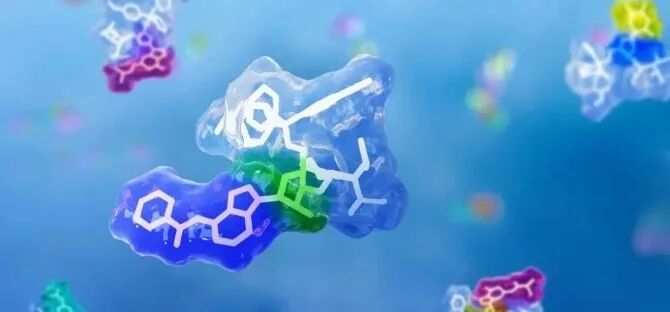
Through WuXi AppTec's integrated CRDMO platform, RCS seamlessly connects covalent chemistry innovation with downstream biological evaluation and candidate optimization, helping partners advance targeted covalent inhibitor programs more efficiently from proof-of-concept to developable candidates, and providing stable, reliable R&D support for tackling traditionally undruggable targets.
About WuXi AppTec
WuXi AppTec (stock codes: 603259.SH / 2359.HK) is a leading global research and development enablement platform with an integrated, end-to-end model. Through its distinctive CRDMO and CTDMO business models, the company continuously lowers the barriers to drug discovery and development, helps partners improve R&D efficiency, and brings more breakthrough therapies to patients—advancing its vision that 'every drug can be made and every disease can be treated.'