Insilico Launches "Longevity Vaccines" Research: Programming the Body's Own T Cells with Circular mRNA
The initiative encodes short-lived genetic instructions in circular mRNA (cmRNA) packaged in targeted lipid nanoparticles, arming a patient's own T cells to recognize and clear senescent cells, activated fibroblasts and autoreactive lymphocytes — addressing initiating cell populations rather than downstream pathology, via a single, self-limiting dose.

Insilico Medicine (HKEX: 3696) announced the launch of Longevity Vaccines, a research initiative developing treatments that direct a patient's own immune cells to eliminate the earliest cellular drivers of age-related disease. The initiative expands the company's dual-purpose, aging-oriented discovery strategy from small molecules into RNA-encoded, in vivo cell engineering.
A Shift from Downstream Pathology to Initiating Cells
Many aging-related diseases are initiated and sustained by discrete cell populations with well-studied surface markers — for example senescent cells that secrete pro-inflammatory proteins (the senescence-associated secretory phenotype, or SASP), activated fibroblasts that drive fibrosis, and autoreactive lymphocytes that erode self-tolerance.
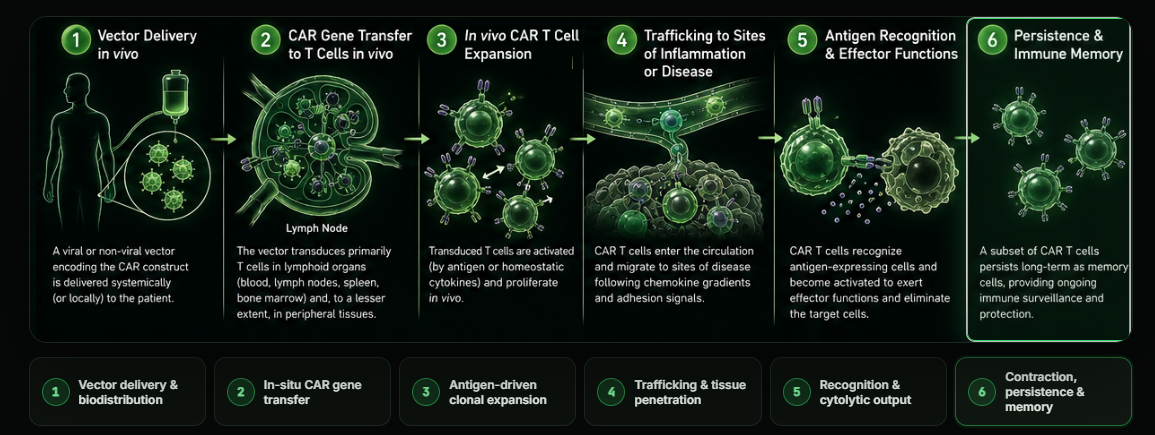
Rather than treating downstream pathology, Longevity Vaccines are designed to eliminate these initiating cell populations within a preventive window and on a transient basis. The approach builds on growing peer-reviewed evidence that engineered T cells can clear such cells and deliver durable functional benefits from a single therapeutic course.
A Programmable, Self-Limiting Chassis
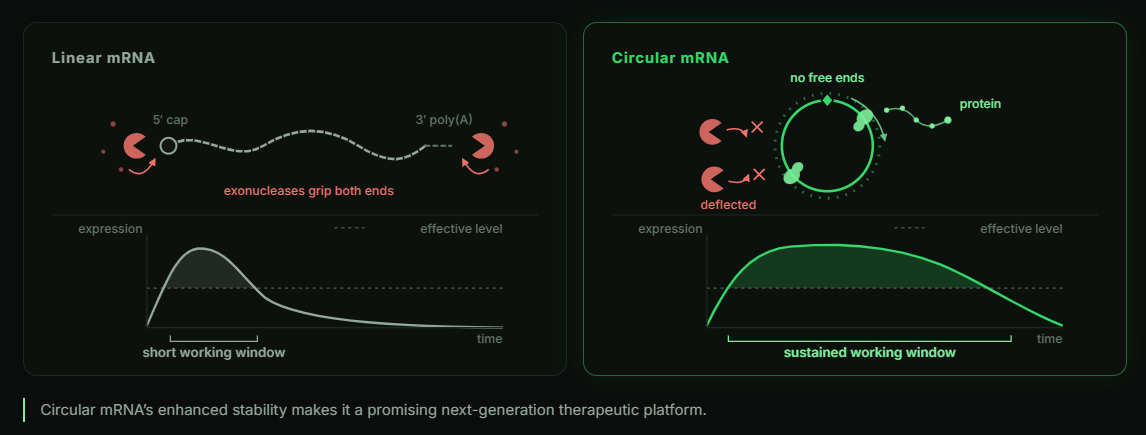
The initiative uses a single, programmable delivery modality: a short-lived genetic instruction encoded in circular mRNA (cmRNA) and packaged within a targeted lipid nanoparticle (LNP). Delivered inside the body, it arms a patient's own T cells to recognize and remove specific target cell populations.
Circular mRNA resists degradation to support durable yet self-limiting expression, while the targeted LNP ensures selective delivery.
An AI Engine for Early, Safe Target Selection
Selecting antigens for preventive medicine demands an exceptionally high bar: targets must appear at the earliest stages of pathogenesis while offering a wide therapeutic window. Insilico addresses this with its end-to-end Pharma.AI platform, spanning multi-omics target discovery (PandaOmics), generative biologics for de novo binder design, generative chemistry (Chemistry42) for ionizable lipids and delivery systems, and AI-assisted clinical trial design (inClinico).
The integrated platform ranks candidate surface antigens by evidence strength, expression timing, tissue specificity against a whole-body surface atlas, deliverability and optimal construct design. Candidates are then validated in automated laboratories, where readouts continuously feed back to refine rankings and designs. Insilico's aging foundation models and Virtual Aging Cell supply the temporal, age-conditioned context needed to pinpoint the earliest divergent cell states in a disease trajectory.
Initial Indications: Immune System Rejuvenation
The initiative will first focus on rejuvenation of the aging immune system, targeting accumulation of senescent lymphocytes that drive immunosenescence, reduced vaccine responsiveness, and rising susceptibility to infection and cancer with age. Additional indications under evaluation share defined initiating cell populations reachable by the same chassis, such as metabolic dysfunction and membranous nephropathy.
Alex Zhavoronkov, PhD, Founder and co-CEO of Insilico Medicine, said: "We built Insilico to treat aging and disease together, and to prove that AI can design medicines that deliver real patient impact. Longevity Vaccines extends that same rigor to preventive medicine — delivering programmable, single-dose therapies that clear the root-cause cells of age-related disease, starting with the immune system itself."
The initiative rests on Insilico's experience with Rentosertib (ISM001-055), a first-in-class TNIK inhibitor whose target was nominated by AI and whose molecule was fully AI-designed, advancing from target identification to preclinical candidate in just 18 months. It recently demonstrated lung capacity restoration in a randomized Phase IIa trial in IPF and has entered Phase III development.